About Me
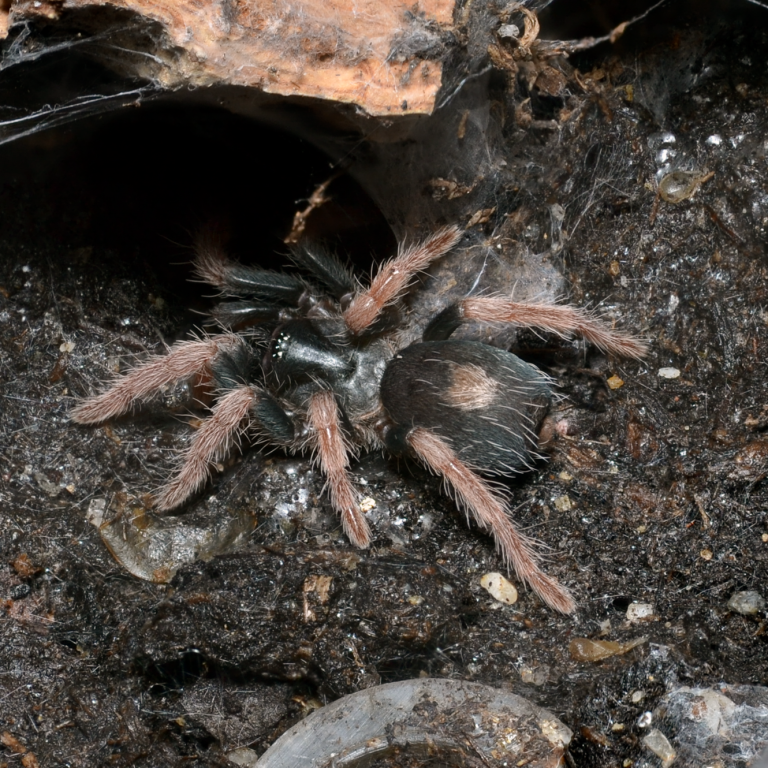
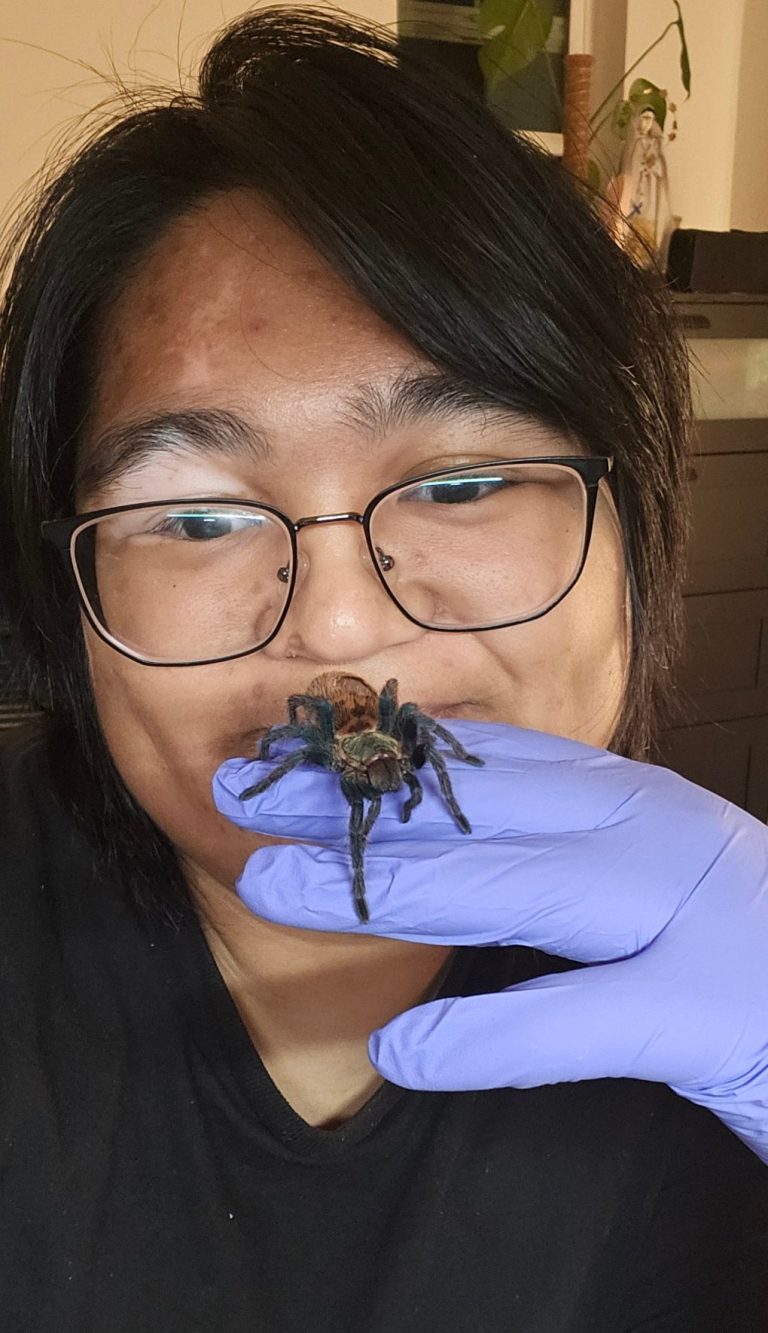
Hello! I'm Marcy! I've had a lifelong appreciation of the spiders, arthropods, and insects from a very young age, but I fell in love with tarantulas when I got my first one in January 2024, a tiny Pumpkin Patch tarantula I very cleverly named Pumpkin Spice Latte. Over the past two years I found a community of like-minded people and they inspired me to start breeding tarantulas to as a way to share my love for them and give back to the community. I paired my first tarantula, Goth the Cyriocosmus sp Oronegro, in July 2025 and had a sac in October that was unfortunately pretty small. But it was not a failure, and it taught me to be resilient against setbacks and temper my expectations, but to still keep that excitement within me and love each and every little success.
I also picked up photography just to photograph dwarf tarantulas! Because they are so small for so much of their lives, macro lenses are often needed to even bring them into frame, and that comes with all it's challenges. I aim to hone my skills not just in tarantula keeping and breeding but also capturing their beauty in photos, at all stages of their lives.
What's so great about dwarfs anyways?
Dwarf tarantulas have a few characteristics that are very appealing to some keepers.
- They tend to show their adult colors early on! This is apparent especially for Cyriocosmus and Hapalopus species as they have their adult coloration as small as .33"
- They grow fast! From right out of the eggsac to maturity, females can mature as short as 14-20 months, with exceptions (looking at you Homoeomma chilensis)
- Smaller space requirements! Not a lot of room for spiders? No problem! Quite a few dwarfs do well in 6 inch cubes as adults, or something slightly bigger. Slings can be kept in sauce deli cups for a good bit of their lives as well. Save money on enclosures and substrate, so you can spend it on more spiders!
However, there are a few things to keep in mind when buying a sling:
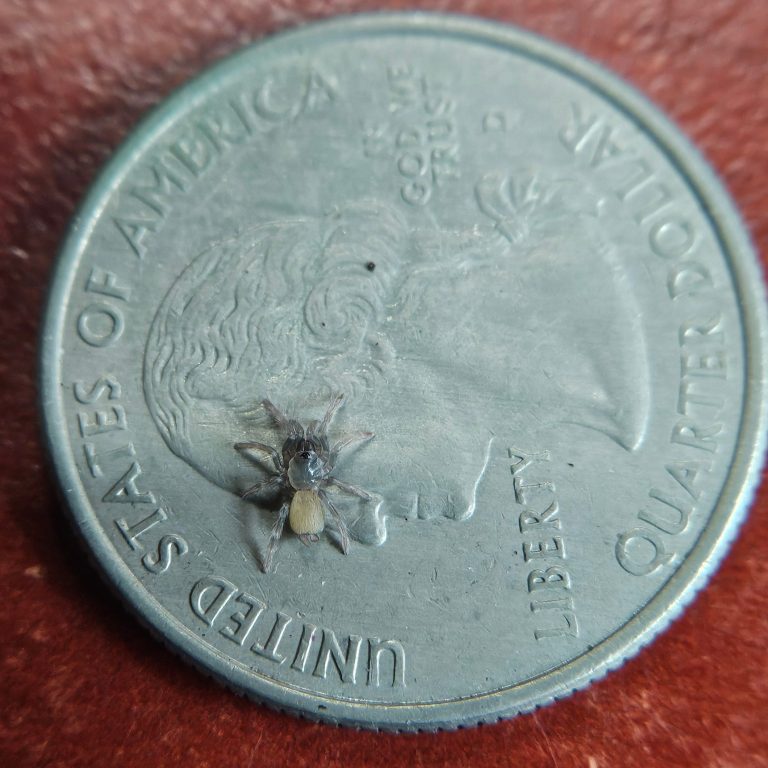
- They're SMALL. Really Small. Because of that, they require small prey for feeding, like fruit flies, peanut beetle larvae, or pinhead crickets or roaches. Also, if you give them too much room, you'll have a hard time finding them.
- They're skittish. They're small and everything is out to get them out there, so they have a higher tendency to be skittish and bolty. Care is required if you want to handle them.
Please keep these in mind when getting 1/8" slings and consider waiting for someone to offer 1/2" slings before purchasing if you're not comfortable with that